Ten Years of Map the System Canada: A Reflection on What We Built, and Why It Matters Now
—by Ashley Dion, Systems Learning Lead
I almost didn't compete.
I genuinely did not think I had anything to contribute. I was a student with ideas about the Canadian charity sector that felt important, but standing up and defending them in front of judges, presenting at the national level, and potentially travelling to Oxford felt like something for other people. Bolder people. People who were comfortable being front and centre.
I was wrong. And I am so glad someone told me so.
My team won at the campus final, then at the Canadian final. At every step, there were people around me saying, "This is good work, keep going,” and then making an introduction or opening a door I didn't know existed. That experience directly led to my internship, which in turn led to my first full-time role, and eventually to my becoming the Lead of Map the System Canada. A thread I never would have pulled if I hadn't been gently pushed into that room.
I share this not as a biography, but as context. Because I think it matters that you know: I am not writing this as an institution. I am writing this as someone the program changed who then had the privilege of turning around and helping hold it for others.
Where It Started
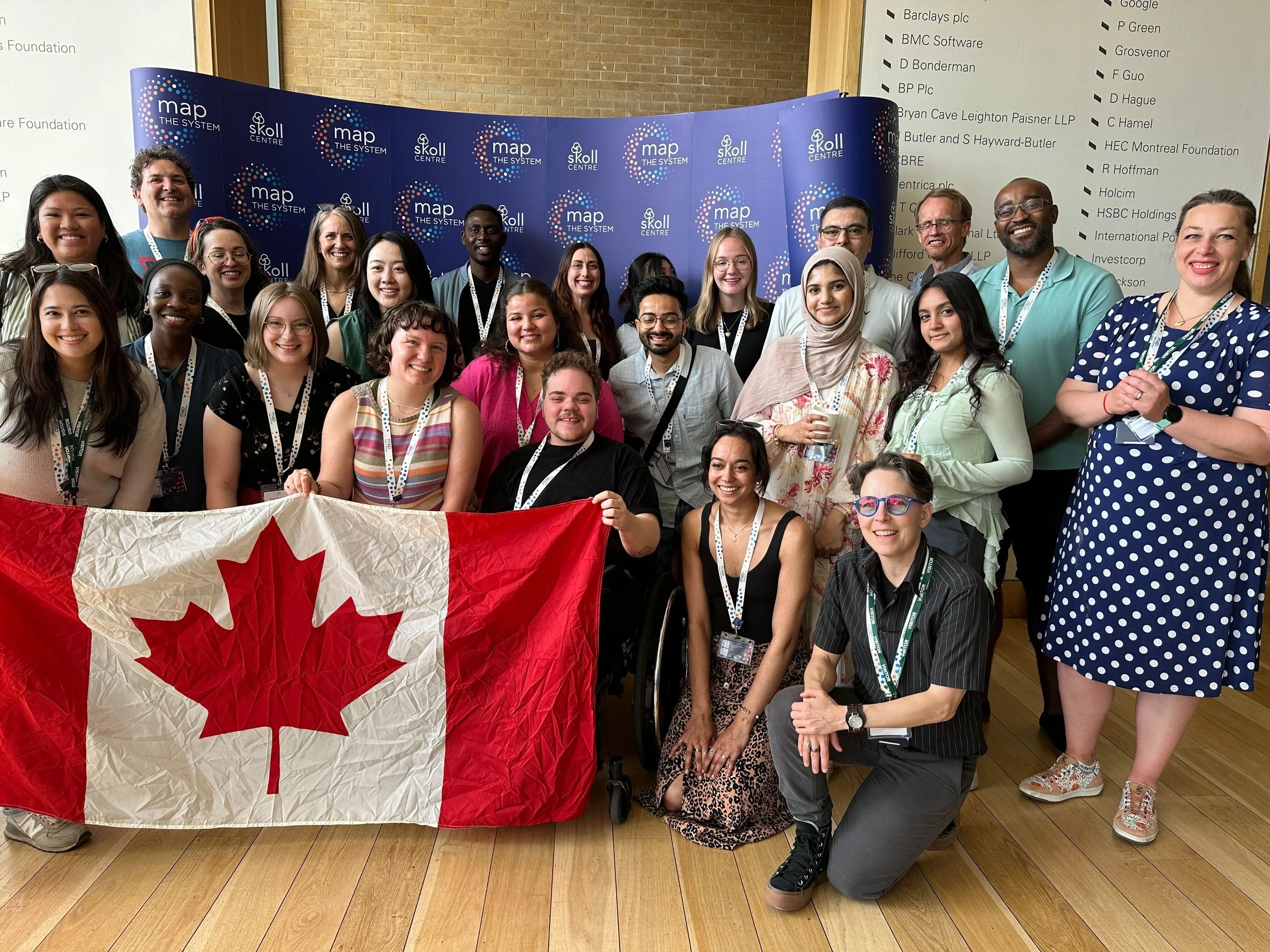
Map the System Canada was established in 2017 by the Institute for Community Prosperity at Mount Royal University. Initial support was provided by the McConnell Foundation to help Canadian students access the Map the System Global Finals at the University of Oxford, a competition created by the Skoll Centre to develop the next generation of systems thinkers and social innovators. The following year, the Institute took on the role of national host, and the longer work of building something lasting began.
Over the past decade, Map the System Canada has grown into something far larger than a pathway to Oxford. It is now a national network spanning more than thirty post-secondary institutions, reaching over a thousand students each year, and supported by an alumni community, an educator network, one-on-one coaching, and a growing library of free resources all oriented around one deceptively simple idea: that understanding a system is the first step toward changing it.
More than 9,000 students have participated in Map the System Canada since its founding.
Why This Moment Matters
When Map the System Canada launched, systems thinking was a niche term, something you might encounter in graduate school, or in certain corners of policy and design, but rarely in an undergraduate curriculum and almost never in a job posting.
That has changed significantly. The World Economic Forum's Future of Jobs Report 2025 now identifies analytical thinking as the top core skill employers require globally, with systems-oriented capacities including resilience, adaptability, creative thinking, and the ability to navigate complexity consistently ranking among the fastest-growing competencies across every major industry. The skills Map the System has been building in Canadian students for a decade are the skills the world is now actively asking for.
This is not a coincidence. It is validation of a long-held belief: that the people best equipped to address our most pressing challenges are those who can see not just the problem in front of them, but the structure generating it.
What This Community Built
What has surprised me most of all is how generous this community is.
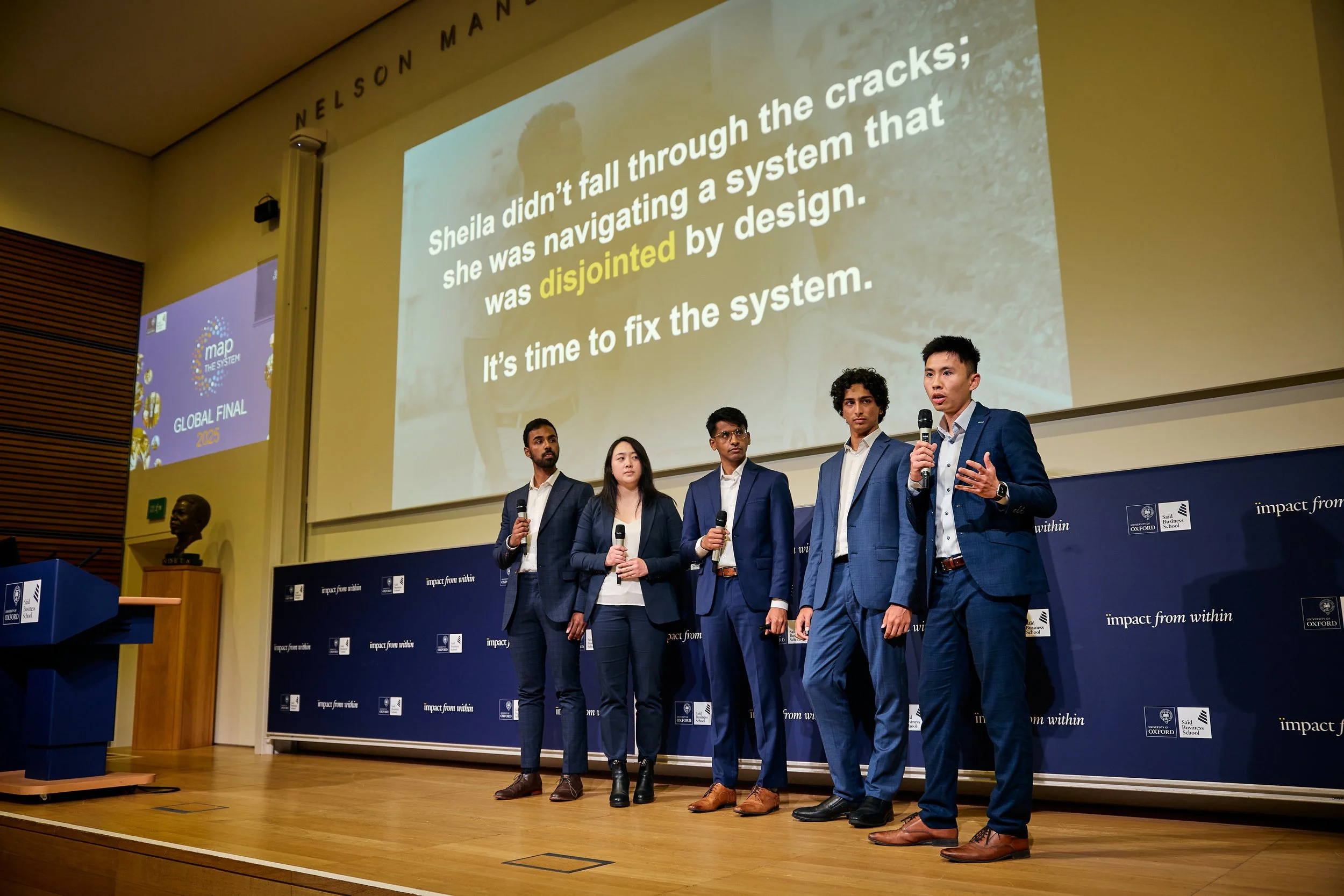
Map the System Canada does not produce a community that competes with itself. What it produces is something rarer: a network of people who have a shared language, a shared commitment to complexity, and a genuine investment in each other's success. Alumni volunteer to coach current students. Educators across institutional boundaries support one another. At the Global Finals, Canadian teams cheer for all Canadian teams because a win for one is a win for the work.
The program has always operated with the understanding that the container matters, but the community is what makes it real. Our advisory community is involved in key decisions. Campus winners' projects are kept publicly available on mapthesystem.ca so future students can build on what came before. The ecosystem is designed around legacy, around people leaving something behind for whoever comes next.
That is not a metaphor. That is literally how this works.
What It Actually Does to Students
The thing I care most about and the thing that will never fully surface in a funding report is what happens in a student's mind when systems thinking clicks.
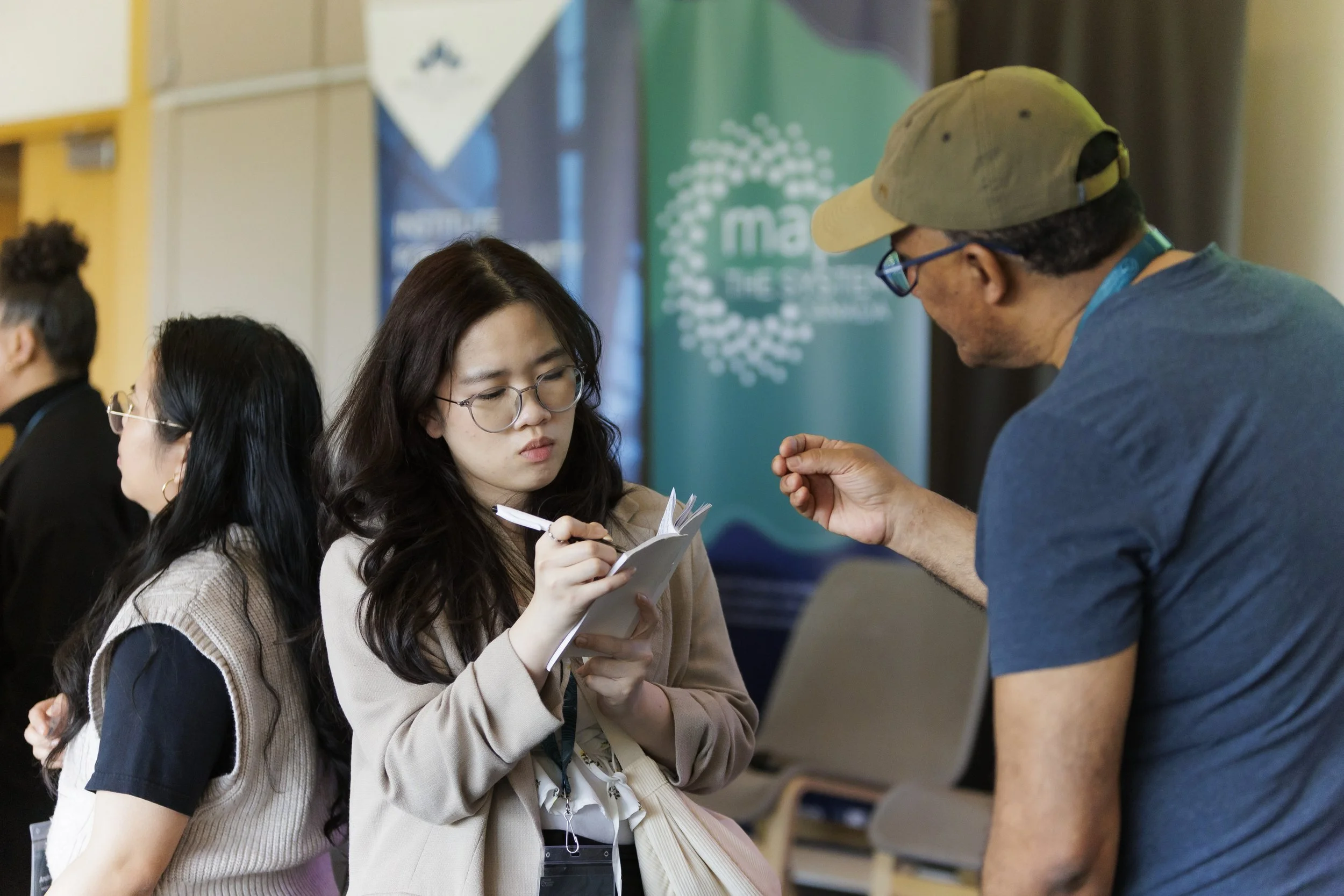
My favourite part of this work is sitting with a student who is stuck, who finds the concept abstract or overwhelming, and simply asking them questions. Questions about something they already understand well. And then watching as the same structure reveals itself in the thing they were trying to learn. You can see it happen. The concept was never as inaccessible as it seemed; it just needed a different frame.
What students gain is not just a methodology. They gain a way of seeing that they cannot unsee. They begin to understand that the social problems dominating our headlines are not the fault of one person or one policy, but the result of systems that have been building for a long time, and that changing them requires working across sectors, perspectives, and time. This is, quietly, one of the most important counter-forces to the polarisation shaping public life right now. Students who think in systems are harder to convince that complex problems have simple villains.
As someone who is Métis, I feel a particular weight and privilege in this work. The communities most affected by broken systems are often those with the least access to the tools and language needed to name what is happening and to advocate for change. Every student who leaves Map the System Canada with systems thinking as part of how they move through the world is someone who can walk into a room, any room and see it differently. That matters. It matters for generations.

What I Have Learned
The program taught me things I did not expect to learn.
Most importantly, you cannot do this work alone. Systems change does not happen in isolation, and neither does building the conditions for it. The success of Map the System Canada over ten years is not the result of any single program lead or host institution; it is the result of every educator who brought the program to their campus, every student who stayed curious, every alumni who came back to coach or mentor or simply talk about their experience with someone who needed to hear it.
Word of mouth has always been the engine of this program. People join because someone they trust told them it was worth it. That kind of trust is built slowly and carefully, and it cannot be manufactured. It is the most valuable thing we have.
I also learned that winning is not the point. I did not win at the Global level, and yet I am still here, still doing this work, still connected to this community, which is the greatest resource Map the System has ever produced. The people you meet along the way, the conversations that shift how you think, the connections that show up years later when you least expect them, that is what the program actually delivers. The competition is a structure. The relationships are the outcome.

To Everyone Who Has Been Part of This
To the educators who bring Map the System to your institutions year after year, thank you. None of this exists without you.
To the students who have competed, coached, stayed connected, and gone on to use what you learned in sectors across Canada, this is your ten years as much as anyone's. The projects you left on our website. The introductions you made. The conversations you had about your experience that convinced someone else to try. That is the infrastructure of this program.
And to anyone reading this who is sitting where I was in 2020, convinced they don't have anything to contribute, uncertain whether they belong in this room, well, you do. Come anyway.
The program does not change systems by itself. It changes the people who will.
Ashley Dion is the Program Lead for Map the System Canada, hosted by the Institute for Community Prosperity at Mount Royal University in partnership with the Skoll Centre at the University of Oxford. Map the System Canada supports post-secondary students and educators across Canada in developing systems thinking skills to address complex social challenges.